
A hair-care shelf can become crowded surprisingly quickly. A new shampoo joins an unfinished conditioner. A supplement arrives with a promise that sounds different from the last one. Before long, the routine is harder to explain than it is to follow. A more considered approach begins with a simpler question: what is each part of this routine here to do?
This guide offers a practical way to organize that question. It looks at supplement labels, the differences between Hair La Vie formulas, everyday care habits and the details worth recording before you change anything. It is a shopping and planning guide, not a diagnosis or a prescription. If you are concerned about hair loss, professional assessment belongs at the beginning of the process.
Start with the routine you already have
Before adding a product, set out the products you actually use in an ordinary week. Include shampoo, conditioner, styling products, scalp products, medicines and supplements. You do not need a beautifully organized shelf or a complicated spreadsheet. A short list on paper is enough. The purpose is to make your current routine visible, including the parts you tend to forget.
Next to each item, write its role in your own words. Shampoo cleans your hair and scalp. A styling product helps you achieve a particular finish. A dietary supplement adds ingredients to what you consume. These are different jobs. Keeping them separate makes it easier to recognize when two products are doing the same thing, or when a product cannot reasonably answer the question you are asking of it.
Be specific about what has prompted your interest. Perhaps you want an easier wash-day routine, clearer information about a formula, or fewer overlapping purchases. Perhaps you have noticed a change in shedding or density. Those observations lead to different next steps. A supplement comparison can help with a shopping decision, but it cannot explain why your hair has changed.
The American Academy of Dermatology explains that finding the cause of hair loss is central to choosing appropriate treatment. Its guide to diagnosis and treatment describes the role of an examination and, when appropriate, testing. New, patchy or persistent hair loss is a reason to seek qualified care rather than simply expand your shopping list.
Write down one useful question
A good starting question is narrow enough to answer. “What is the serving size of this formula?” is useful. So is “Does this contain an ingredient I avoid?” Questions such as “Will this give me perfect hair?” cannot be answered by a product photograph or an ingredient list. Replacing broad expectations with concrete questions helps you decide what information you still need.
If you plan to speak with a clinician or pharmacist, take the actual labels or clear photographs of them. Include products you use occasionally as well as daily. Mention any upcoming laboratory tests and any other supplements containing the same nutrients. This gives the conversation a practical starting point and helps you avoid relying on memory when several bottles look similar.
Read the label in a useful order
The front of a supplement bottle is designed to be easy to recognize. The back and side labels do more of the detailed work. When comparing products, move through those details in the same order each time: identity, serving size, Supplement Facts, other ingredients, allergen information, directions and warnings. A consistent order makes differences easier to notice.
First, confirm the exact formula and pack
Begin with the full product name. Clinical Formula and Revitalizing Blend are separate formulas, even though both carry the Hair La Vie name. Then confirm the bottle count. A two-bottle offer is a pack choice within a formula, not a third formula. Check the selected option on the product page and again before payment.
Packaging can change, and online galleries may include a single-bottle label for a multiple-bottle offer. Read the pack description alongside the photographs. If the image and selected option appear inconsistent, resolve that uncertainty before ordering. Once a delivery arrives, compare the received product with the order details and read the label on the actual bottle.
Then, look at the serving size
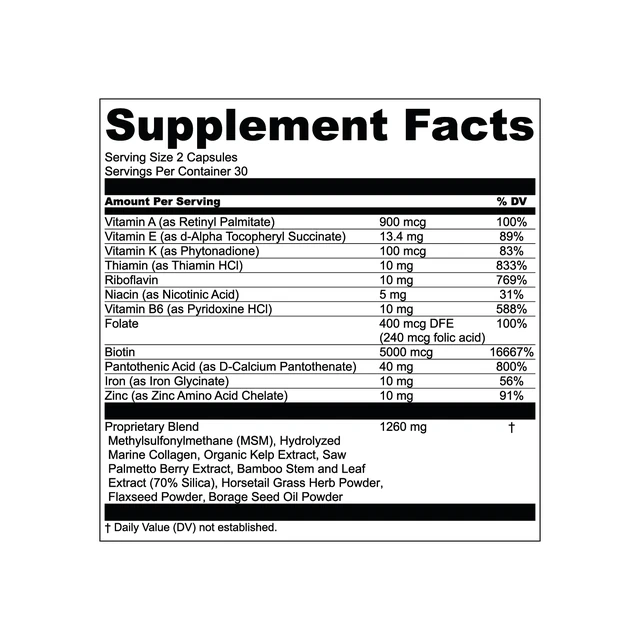
Capsule count and serving count are different measurements. A bottle with more capsules does not automatically last longer. For the listed Hair La Vie options, Clinical Formula contains 90 capsules with a daily serving of three. Revitalizing Blend contains 60 capsules with a daily serving of two. Both single bottles therefore contain 30 daily servings when used according to their respective directions.
That calculation is useful for comparing pack sizes, but it should not become a reason to change the directions. Taking fewer capsules to extend a bottle or more capsules to accelerate a hoped-for result creates a different routine from the one described on the label. Follow the current product directions and get professional advice when they do not fit your circumstances.
Read amounts, not just ingredient names
An ingredient appearing in two products does not make those products equivalent. Check the quantity per serving and how the label presents the ingredient. Individual vitamins and minerals may have declared amounts, while a blend may be listed differently. Do not assume that a familiar name on the front tells you everything about the formulation.
Also consider what is already in your routine. A multivitamin, a separate beauty supplement and a hair supplement may overlap. Put the labels side by side rather than treating each purchase as an isolated decision. A healthcare professional can review whether that overlap is appropriate for you; adding the largest numbers together is not a useful shopping goal.
Biotin is a particularly useful example of why context matters. The National Institutes of Health notes that biotin deficiency is uncommon and that evidence supporting biotin supplements for hair, skin and nails is limited. It also explains that supplemental biotin can interfere with some laboratory tests. Read the NIH biotin consumer fact sheet and tell your healthcare team about supplements you take before testing.
Finish with the details beyond Supplement Facts
The other-ingredients list, capsule material and allergen statement deserve their own check. A shopper avoiding animal-derived ingredients, for example, needs more information than the presence of a botanical on the front label. Clinical Formula uses bovine collagen. Revitalizing Blend uses marine collagen. Neither is a vegan formula, and a marine ingredient deserves particular attention if you avoid fish.
Finally, read the directions and warnings together. Storage instructions, age restrictions and cautions relating to pregnancy, nursing or medical conditions should not be separated from the decision to use a product. If any part of the wording is unclear, pause and ask a qualified professional or the product team using the contact information on the packaging.
Compare the formulas before choosing a bottle count
The most useful comparison begins with formulation, then moves to convenience. Choosing a larger pack first can make the decision feel like a price exercise before you have established whether the product fits your needs. Start with the differences below, read the complete labels and only then decide whether one bottle or two makes sense.
| Your question | Clinical Formula | Revitalizing Blend |
|---|---|---|
| Collagen source | Bovine collagen | Hydrolyzed marine collagen |
| Serving size | 3 capsules | 2 capsules |
| Single bottle | 90 capsules / 30 servings | 60 capsules / 30 servings |
| Two-bottle pack | 180 capsules / 60 servings | 120 capsules / 60 servings |
| Examples of ingredients | Biotin, saw palmetto, reishi mushroom, zinc, iron | Biotin, saw palmetto, kelp, MSM, borage oil powder |
| Where to begin | View Clinical Formula ↗ | View Revitalizing Blend ↗ |
Clinical Formula: examine the complete blend
Clinical Formula brings together vitamins, minerals and botanical ingredients alongside bovine collagen. Its three-capsule daily serving is an important practical detail. If you are reviewing it with a professional, bring the full label rather than a short list of highlighted ingredients. A headline can orient you, but it cannot show the complete composition or replace an individual review.
The single-bottle and two-bottle options use the same formula within this collection. The difference is the number of bottles and total capsules in the offer. The product page lets you move between those options while keeping the formula information close by. Check which pack is selected immediately before opening its purchase offer.
Revitalizing Blend: pay attention to the marine source
Revitalizing Blend includes hydrolyzed marine collagen and a different ingredient blend. It uses a two-capsule daily serving. Those differences are enough to make a separate label review worthwhile, even if you have previously used Clinical Formula. Familiar branding should not lead you to assume that serving sizes, ingredients or suitability are interchangeable.
For someone comparing animal-derived ingredients, the source of collagen is a concrete distinction. It is not, by itself, proof that one formula will produce a better result. Use it as part of an ingredient and preference review. If you have an allergy or a medical reason to avoid a particular source, ask for appropriate guidance before choosing.
Keep formula comparison separate from outcome promises
A useful comparison can tell you what is listed, how many capsules make a serving and which packs are available. It cannot predict an individual result. Hair changes have many possible causes, and the same routine will not answer every person's concern. Treat a formula finder as a way to organize product information, not as a diagnostic quiz.
For the same reason, do not combine the two formulas simply because their names sound complementary. They contain overlapping nutrients. More bottles can make the routine harder to evaluate and increase the importance of a professional review. A clear decision may be to choose one formula, or to wait until you have better information about your needs.
Build everyday care around a manageable plan
Once the product questions are clearer, turn to the routine itself. The goal is a plan you can understand on an ordinary busy day. Start with the essentials you already use and identify one point of friction. Perhaps labels are hard to read in the cupboard, wash-day products are scattered, or you repeatedly buy a replacement before checking what is left.
Solve that small problem first. Keep similar products together, store supplements according to their labels and make directions easy to find. Keep products in their original containers when the packaging carries important instructions or identifying information. Avoid moving capsules into an unmarked container that makes it difficult to tell one formula from another.
Make a simple weekly care outline
A weekly outline can be a reminder rather than a rigid schedule. Note the hair-care steps that depend on your own washing and styling needs, then list any occasional tasks such as cleaning brushes or checking product supplies. The outline should reflect your hair and daily life. It does not need to resemble someone else's elaborate routine to be useful.
Keep handling gentle, especially if you are experiencing thinning or shedding. The American Academy of Dermatology offers hair-care tips for people with hair loss, including attention to conditioning and avoiding unnecessary damage from heat or tight styles. If a particular practice causes discomfort or tension, that is worth discussing with a professional rather than treating it as a necessary part of styling.
Change fewer things at once
Introducing several new products together makes the routine difficult to describe and harder to review. You may not remember which change came first or which product you actually used consistently. A short dated note can help preserve those details. Record the product name, the reason for the change and any questions that come up.
This record is for clarity, not self-diagnosis. If you notice an unexpected reaction, stop using the relevant product and seek appropriate advice. Do not continue just to complete a planned trial or reach the bottom of a bottle. Your wellbeing matters more than making a purchase feel worthwhile.
Plan replenishment without overcommitting
Bottle count becomes useful after the formula decision. A single bottle is a smaller initial purchase. A two-bottle pack changes the quantity you receive, and its value depends on the actual selected-offer price. Compare the total and, if helpful, the price per bottle. Do not assume a larger pack is always cheaper.
Before checkout, check whether the offer is a one-time purchase or includes recurring deliveries. Review the delivery estimate, seller information and return terms as well. These details can matter as much as the headline price. If your routine is still being reviewed, avoid letting a promotional message decide the amount you order.
Review the routine with realistic questions
A useful review asks whether you understand and can follow the routine, whether anything has changed and whether professional input is needed. It does not require you to inspect your hair every day under different lighting. Frequent comparisons with inconsistent photographs can be confusing, especially when hairstyle, parting, angle and light all vary.
If you choose to keep a record for a clinical conversation, make it simple and consistent. Note relevant dates, product changes and the concerns you want to discuss. Bring the information to your appointment without trying to turn it into a diagnosis. The record should support a conversation, not pressure you to interpret every small variation.
Use a short review checklist
- Can I explain what each product in my routine is for?
- Have I read the current label and kept the packaging details?
- Am I duplicating ingredients across supplements?
- Do I need advice about a symptom, medicine, allergy or laboratory test?
- Does the selected pack still fit my actual routine and budget?
These questions can reveal a useful next step even when the answer is to buy nothing. You might need a clearer label photograph, a professional review or simply time to use the products already on your shelf. A considered routine leaves room for that pause. It does not depend on continuously adding another product.
Keep the information easy to revisit
A good product note can be very short: formula name, serving size, bottle count and the date you checked it. Keep it somewhere you can find before reordering. This avoids comparing a remembered price for one pack with the current price of another. It also gives you a clear reference if packaging changes between purchases.
Separate observations from assumptions in those notes. “The label lists two capsules per serving” is a detail you can verify. “This must be stronger because the bottle is larger” is an assumption. Keeping that distinction visible makes future decisions calmer and more accurate. If you cannot verify a detail from the label or offer, mark it as a question rather than filling in the gap.
You can apply the same approach to the rest of your shelf. Write down what a product is, what role it plays and any instructions you need to remember. Review the list when your needs change. The result should be a useful reference, not another demanding task in an already busy day.
Before you place an order
Return to the exact product page and confirm the formula name, capsule count and bottle count. Open the label photograph if you need another look. The displayed price is a checked amount; the final offer may change. Review the selected option and amount again on the purchase page before paying.
After delivery, retain the order information and inspect the bottle, seal, lot details and expiration date. If something is incorrect or damaged, use the support options attached to that order. For questions about the formula itself, the contact information on the packaging helps the product team identify what you received.
A routine becomes easier to maintain when its choices are clear. Know the role of each product, give the label time and attention, and seek qualified help for concerns a shopping guide cannot resolve. From there, choosing between formulas and bottle counts becomes a smaller, more practical decision within your everyday care.
General information, not individualized medical advice. Always read the current product label. Product facts in this guide refer to the listed Hair La Vie offers; packaging and formulations can change.